Friday, August 27, 2010

Snickerdoodle Stories

Like most of my farmers' market encounters, this one started with something on the table that caught my eye. It was local flour and the minute I saw it, I had to try some. I was so impressed with Dunbar Farms I mentioned their flour in a previous blog post, and last week I wrote a blog for Village Books about finding Dunbar Farms and their grain and bean production.

When I visited the farm I was impressed by this low-tech way of drying the grain in the sun. Recently, I discovered that grains ground and sold in grocery stores are often dried at too high of heat and the germ is killed making those grains impossible to use as seed. It made me wonder about wheat allergies. The way we grow and dry grains in massive commodity quantities makes me suspect that the growing number of wheat allergies in this country could be due to the way wheat is cultivated and processed. Maybe if more people ate sustainabley-grown local wheat processed at a lower temperature we'd see less allergic reactions.
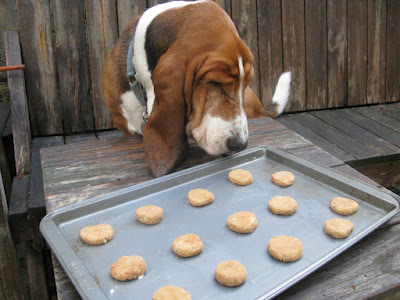
I wanted to use this local flour in a recipe that would highlight the wheat flavor so I chose Snickerdoodles. It was an old recipe that my daughter gave me, but I misplaced it, so I tried to recall all the ingredients and I made my own version. Even Finn was impressed by my creations.
Snickerdoodles
This is a nice showcase recipe for locally grown and processed flour.
(Makes about 42 cookies)

2 cups whole wheat pastry flour
1 1/2 teaspoons baking powder
1/2 teaspoon baking soda
1/2 cup butter
3/4 cup sugar
1 to 2 teaspoons vanilla extract
1 large egg

3 tablespoons sugar
2 teaspoons cinnamon

1. Preheat oven to 350 F. Line a baking sheet with parchment paper or oil lightly.

2. Combine flour, baking powder and baking soda in a mixing bowl. Blend well. In another bowl, combine butter, sugar, and vanilla extract. Cream these together until smooth, then add the egg and mix well. Combine dry and liquid ingredients and stir until a firm dough forms. (It must be stiff enough to pick up and roll into balls.)

3. Combine the sugar and cinnamon sugar in a small bowl. Then take a small amount of dough (about a teaspoon and a half) and roll it into a ball. Roll the ball in the cinnamon sugar. Set the sugared ball on the baking sheet and flatten with the bottom of a glass.

4. Bake for 12 minutes, and try to keep your kitchen assistant from eating them all.


Monday, August 23, 2010

Bellingham and Coupeville--Small Farmers' Markets with Big Flavors

The Wednesday Bellingham farmers' market runs from June through September from 12-5pm behind Village Books in Fairhaven. The grass lends a refreshing touch and the ambiance of strolling from stall to stall under glass covered shelters give the market a charming flavor. People hang out on the lawn or steps and dogs on leashes are welcome so I could bring my kitchen assistant next time. He'd love this market with the slow and relaxing atmosphere.
No tamales at this market so I stopped for a slice of summer vegetable pizza with zucchini, peppers and onions.
Tomatoes, corn, peppers and onions were out on tables. I'm crazy for corn so I loaded up at this place. It's fun to see the different flowers at markets and here amaranth (those floppy magenta cone-shaped blooms) were all over the place.
Prices were all very similar to Seattle prices, with peppers and berries being a bit on the high side. A half pint of blueberries at this market was $4. The displays were beautiful and mostly the produce looked so luscious, it was worth the price. Check out these beautiful peppers.
I'll be at the Bellingham Wednesday Market and Village Books on September 1. At 2pm I'll be at the market under a tent on the stage signing books and talking about Northwest produce and what to do with it. I'll have plenty of easy recipe ideas for you to try at home. At 7pm join me in Village Books to hear how this unique cookbook book got started ,and learn the latest farm story updates from The Northwest Vegetarian Cookbook.

This past Saturday I visited the Coupeville farmers' market. It's open from 10am to 2pm and I think it runs from June through November. It was hard to tear myself away from my favorite market where I can get peaches,blueberies and tomatoes from my favorite farmers, but I was offered an opportunity to sell my cookbook at the Coupeville farmers' market so I took it.

One thing I noticed right away was the rural feel of this market. It's in an open field and though there was plenty of room for crowds because the tents are situated so far across from each other, the the crowds never materialized. Someone told me that it was the last weekend for the country fair and many people had gone there and another larger farmers' market is a little farther south so perhaps more people go there.

This was about as busy as it got--and the distance between rows gave me the feeling of a small person in a giant suit of clothes. If you yelled I don't think the people across from you could hear you at all. But while I was there, I called my friend Patty who said the U-District market was crazy busy (like it always is in August), so I was glad to have the opportunity to slow down for one weekend.
Though local tomatoes were in short supply here (that long, damp spring again), a farm vendor near me was from Toppenish, southeast of Yakima. They were selling tomatoes, potatoes, onions and green beans at great prices and these colorful peppers kept twirling in the wind so I had to take a picture.
As I strolled around the market I saw this farm sign and had to stop and chat with Sheila Case, a fourth generation farmer whose great-grandparents started her farm. "My daughter will be the 5th generation," she told me proudly. This is a farm with lots stories to tell.

I got some of these fresh red onions from Sheila. Who can resist when they're this pretty? Fresh onions make just about any dish sparkle in the summer.
This tractor in the middle of the market was attached to two farm vendor tables. I walked over to talk to the farmers about Rockwell beans. So many people stopped by my market table and mentioned that Rockwell beans are unique to Whidbey Island, so I had to get the story. The farmers told me the Rockwell beans weren't quite ready yet, but would be available next month for sure.

Edible Seattle ran a baked bean recipe that noted Rockwell beans originated in Coupeville,but it isn't really certain whether Elisha G. Rockwell brought the beans to the Island or they originated there. ElishaRockwell was growing the unique beans in 1890 and farmers on Whidbey Island have been growing them ever since.
I bought some Dragon's Tongue, yellow wax and romano beans and who could resist this beautiful garlic? The Coupeville market may be small town and not as many people showed up but the food was great and I came home with delicious fresh beans, beautiful summer squash, perfect pepperss, sweet onions, garlic and basil--the perfect balance of flavors and colors for a summer meal.

Monday, August 16, 2010

Finn's Fruit Fest

I love the few weeks when it's hot in Seattle. And one of the things I love best is summer fruit and this week the melons at River Farm came in. Pick up these melons and you can practically smell the juicy sweet orange flesh inside. I don't know how they get their sugar content in these melons so high. I bought one and as soon as I got home and tasted it, I wished I'd gotten two. "How long are they good for?" a woman had asked Liz. "Today," Liz replied. "They were just picked last night." That's just the kind of fruit Finn goes wild over.

I thought it would be fun to get a shot of Finn with all the fruit I bought at the market. A good kitchen assistant is supposed to wait, look at the product, just hang out like a model.

But this apricot photo this looks like when good dogs go bad. He got carried away when I set the apricots in front of him, burying his nose in them. When caught in the act, he stared blankly as if I was ranting in Chinese or maybe he was feigning short term memory loss. Basset hounds feelings aren't easily hurt. They want food, that's all.

Who'd like an apricot now? I got these at Grouse Mountain Farm and this box of apricots is already disappearing much too fast without too much help from Finn.
I also got a box of peaches from Rama Farm. And I cut up a lot for freezing. My grandmother used to serve half-frozen peaches for breakfast. I remember the ice crystals in the peaches and the sweet flavor. Today, half-frozen peaches are one of my favorite breakfast treats. Like other tree fruit farmers, Rama Farm in Bridgeport experienced low pollination from the long cool spring we had in the Northwest. Last week they like Grouse Mountain they missed the market because they didn't have enough to bring. This week they still had less fruit than they'd expected.
I can't help buying berries, so I got blueberries from Rent's Due Ranch and these big juicy strawberries from Willie Green's Organic Farm. I wonder: why don't my strawberries ever look like this?
I put a mixture of fruit together and made an apricot sauce. It's just apricots, culinary lavender, lemon, honey and Port Madison goat yogurt blended until creamy. I love dreaming up fruit topping and smoothie combinations and I've got lots of ideas.

Check out my column about making fruit toppings this month in Marlene's Sound Outlook and get some fun ideas for chilling out on hot summer days.

Chester Blackberries, Frikeh and Fenugreek Greens At Ayers Creek Farm

My last stop in Oregon was the Hillsdale Farmers Market and Ayers Creek farm booth, and if you haven't been there, you must go and bring home a few treasures from this amazing organic farm that is also featured in a profile in my book. An editor at Timber Press clued me into this farm and ever since I met Anthony and Carol and toured their farm, I've become a confirmed fan. And at the market, it was easy to see I wasn't alone in my appreciation.

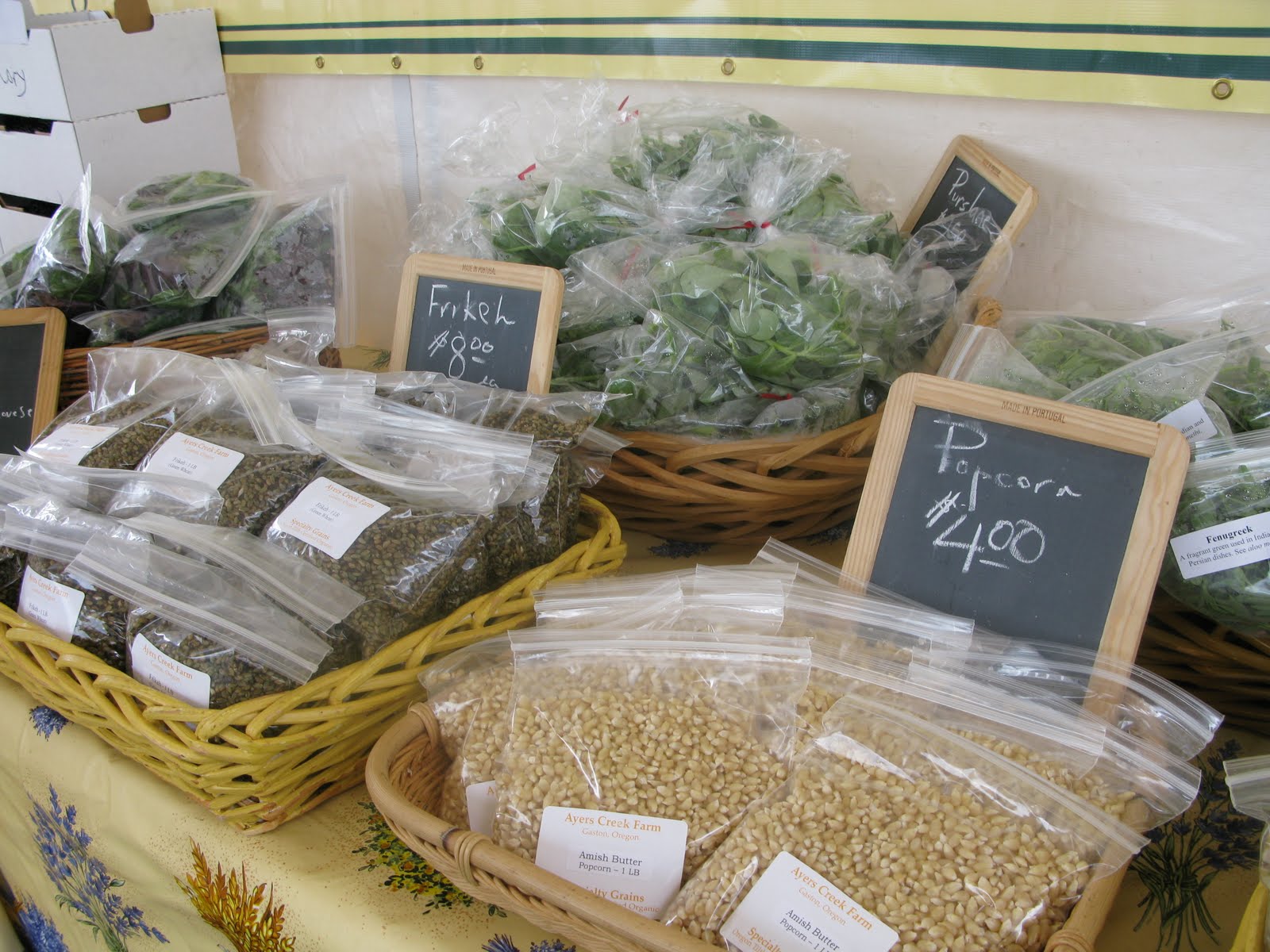
I'd planned to get frikeh (a parched green wheat)--Anthony had mentioned they'd have it in his weekly newsletter. What I hadn't anticipated was being seduced by Chester and Triple Crown blackberries and intrigued by Fenugreek greens.
See these Chester blackberries, three flats deep on this table? A crowed formed before the market sales began and people piled up three and four flats. A short time after sales began this tables was nearly cleaned off. I'd been eyeing those berries so big and succulent and all those people loading up, well, I couldn't resist them either.

One taste and those juicy sweet blackberry tones played with my palate. The flavors were perfectly balanced and seeds remained in the background as the juice oozed out. The lingering complex decadent-tasting flavor with a mildly tart essence made it clear why people loaded up here. I bought two pints and when I got home and shared them, I wished I'd gotten more.
I was also tempted by these squash blossoms. I'd never seen squash blossoms so large and perfect. Carol said that the bumblebees love them so much they sometimes fall asleep in them. "I have to shake the flowers in the mornings to wake the bees up," she laughed.
Ayers Creek also has an inviting display of preserves and charming chalkboard labels that really say Carol and Anthony Boutard love growing quality produce and bringing it to market. It's hard not to take pictures when their produce is so beautifully displayed. The red currant preserves are great additon to panty and they're so elegant looking, they make great gifts.

The shallots and garlic caught my eye next. I bought some grey shallots. Last year I blogged about them and even grew some, but Anthony and Carol's grey shallots seem larger, so I asked Carol which shallots I'd plant if I wanted to grow them. "The smallest" she'd told me. The cloves apparently aren't like garlic. With that, you plant the biggest cloves. "And they're heavy feeders," Anthony said, "So fertilize and don't overwater." Next year I'll plant one or two of the cloves I bought.
My gaze moved to the other table. Amish Butter popcorn, frikeh and greens. The locally grown popcorn looked so perfect I had to buy a few bags. Maybe I'll save some seeds and try planting a few of these kernels next year and see what comes up in the garden.

I picked up the frikeh and imagined it with parsley and lemon in a refreshing tabbouleh salad. I could almost taste she smoky-sweet flavor. Carol said the key to the sweet flavor is that the green wheat is harvested before the sugars transform into starch in the grain. As far as I know Ayers Creek Certified Organic Farm is the only farm growing and processing frikeh in the country, so if you want to take a foodie vacation be sure to put the Hillsdale Farmers Market on your list. July and August are best bets for getting frikeh.

Right above the frikeh was a package of vibrant-looking fenugreek greens which I picked them and toyed with before asking, "What do you do with these?" This was the first time I'd seen them at a market.

"Open the package and smell," Carol said.

When I opened the bag and inhaled I caught a faint whiff of cinnamon with a hint of ginger. Was I just imagining it? But Carol's smile said I wasn't. Perhaps market produce should be sniffed before buying. "Isn't it heavenly?" Carol said.

"But how do they taste raw?" I wondered out loud. "They're bitter when raw, but add them to the end of fried potatoes and they're perfect," Carol said. They're popular in Indian cooking and also in many places in Africa. I was so intrigued with this green that was new to me, I bought two bags.

I couldn't stop talking about the frikeh, popcorn, berries and greens when I got home and I couldn't wait to try them. Here is what I made:

Potatoes, Favas and Fenugreek Greens with Sweet Onions

I used Colorado Red potatoes, Walla Walla sweet onions, the last favas of the season and salsa are from Gathering Together Farm. The Fenugreek greens came from Ayers Creek Organic Farm in Gaston, Oregon. I also used Rockridge Orchards apple cider for a braising liquid

1 t0 2 tablespoons extea-virgin olive oil
1 or 2 medium-size sweet onions, sliced
3 medim-size red potatoes, cut into bite-size chunks
3 or 4 cloves garlic, minced or pressed
1 cup fava beans (removed from pods and blanched)
Apple cider
2 cups of fenugreek greens
Lemon juice
Freshly ground flur de sel sea salt and pepper
Fresh salsa (optional)

Saute the sweet onions in olive oil until soft, add potatoes, stir and cook until soft and onions are beginning to brown. Add garlic and fava beans. Stir and cook for a few minutes before addding fenugreek greens. Stir then add just a little apple cider, cover and braise the greens until soft but not overcooked. (Check after a few minutes.)

Squeeze lemon juice over the mixture; sprinkle with salt and pepper and add a spoonful of fresh salsa over the top.

My cooking assistant was so happy to see so many treasures from Oregon and he can't wait to sample each one. This recipe is rated four paws up.

Friday, August 13, 2010

Cool Oregon Farmers Markets to Visit

Considering a trip through Oregon? Try a farmers' market trip from Ashland to Corvallis.

In southern Oregon, the Rogue Valley Growers and Crafters markets sell in three locations on three days. Ashland hosts two markets--one on Tuesday(8:30-1:30) and another larger market on Saturday (9-1). Medford hosts one market on Thursdays (8:30-1).

I visited the Medford farmers' market, which is a block or two from the Harry and David tours and retail store and not farm from Rogue Creamery in Central Point. Plus, if you're up for a winery tour, there are plenty of great wineries here.

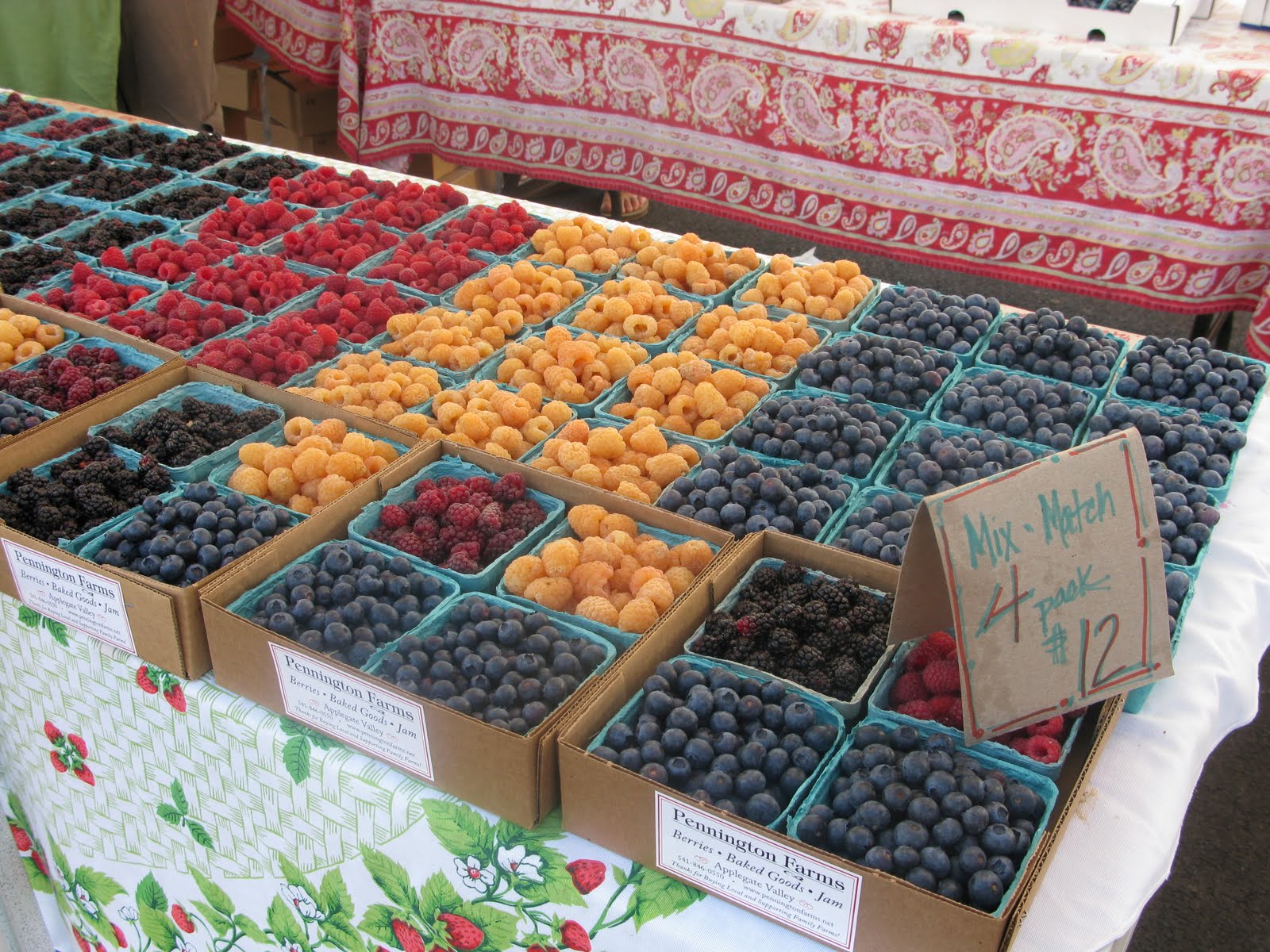
I arrived at the market early and hungry, so when I saw Pennington Farms, I couldn't resist a pint of berries. In southern Oregon berry farmers have different challenges when growing berries, and one challenges is the summer heat. Berries can't take 90 degree days for long or they get mushy. And when it gets hot, Cathy Pennington turns her sweet sun drenched berries into jams and syrups. She bakes incredible sweet turnovers to sell at markets. The berries and turnovers disappear quickly at the markets, so arrive at the market early to enjoy these treasures.


Another farm featured in my book is Whistling Duck Farm in Grants Pass. This is a multiple succession row crop farm that grows amazing vibrant produce to sell at the market and the Ashland Food Co-op. I stopped to say hi to farmer Mary Allonis and asked her what she did with purslane. "I made a smoothie with it this morning," she said brightly. She added celery and another green and made it in a VitaMix blender.
I also stopped at the Fry Family Farm booth and was so impressed with the bouquets of flowers that Suzy Fry grows, cuts and arranges that I wished I lived here. Steven and Suzi Fry also sell an amazing variety of produce including beautiful eggplant, peppers and tomatoes. Check out their CSA newsletters to find out what is in season and how to cook it right now
I was delighted to hear Suzi had met JoanE from Rent's Due Ranch in Stanwood, Washington. When I featured these two farms together in a farm profile in my book, I had mentioned how much in common they had with Rent's Due Ranch. It was gratifying to hear they had made a connection through my cookbook.
Another farm I discovered at this market was Dunbar Farms, run by David Mostue--a twenty-six year old fourth generation farmer whose 230-acre farm has been in this area since 1909. These bags of wheat started a conversation that led a freshly baked cookie that led to a farm visit the next day.

"Dunbar Farms was my great-grandfather's farm and he started growing pears," David told me. Now David (26) is growing beans, grains, vegetables and has a few acres in wine grapes. He also hosts the Rogue Valley Farm-to-School program, where Medford school children come to learn how to plant, harvest and cook local produce. I couldn't resist buying a bag of Dunbar pastry flour. (This flour needs to be refrigerated or frozen because it's a cracked whole grain.) I stuck it in my ice chest and when I visited the farm the next day, I bought two bottles of Rocky Knoll Dunbar Red Wine.

Another thing I like about markets is you can usually find a vendor selling tamales, my first choice for market food. These spinach tamales were so good I went back for seconds.
It's a long mountainous drive to Corvallis, but the scenery is beautiful and the Saturday Corvallis market is worth the drive. The market is one of the most beautiful markets I've seen. It's downtown along the waterfront of the Mary's River. It's breathtaking to see the amount of produce from the fertile Willamette Valley in the early hours before the market opens. From demonstration beehives and comb honey to berries to beans to produce filled crepes--this market is everything a farmers' market foodie dreams about.

This is Denison Farms, another farm featured in The Northwest Vegetarian Cookbook. Tom Denion started out selling berries, and the amount of berries on his farm tables now is astonishing. I couldn't believe they were unloading so many flats of the most beautiful certified organic berries--luscious strawberries, yellow and red raspberries, mulberries, blackberries and blueberries--and this is just one of the markets where Denison Farms sells. And Denison Farms also has a fairly large CSA to fill each week.
Check out their big chalkboard signs. Denison Farms berries are so sweet and flavorful, and the abundance of them almost makes growing them seem deceptively easy. With all the berries, I could easily live near this farm.
Their peppers and celery are awesome, too. You might think: "Celery so what?" But the flavor difference between locally grown and grocery store is astonishing. I'd recommend taking a giant cooler, if you want to take treasures from this farm home. I got a bag filled with peppers and I've roasted, grilled and sautéed them. There is nothing like them around here, but maybe food tastes better when each bite is filled with memories.
The Corvallis market is a busy place where canine companions are welcome on short leashes. I saw many dogs greeting one another and there was even a vendor selling locally processed dog bones.
This market has vendors that boast green transportation like this all-electric Gem car that pulls a basket filled with Artisan goat cheese to the market.
Another unusual vendor I discovered at this market was a seed growing farm called Peace Seedlings--the next generation of Peace Seeds. I got a package of Red Swan Bush Snap Beans and a 7 Kale Mix. "Is is like a grab bag of kale seeds?" I'd asked. "Exactly," grinned the farmer who said was taking over the business from her father who had this business for 25 years. Growing seeds is different from growing produce for market because you don't harvest the best specimens. Those beautiful market specimins I love at the market are the plants a seed farmer saves for seeds.
Many farmers' markets have entertainment but the Corvallis market has lots of guitar pickers and singers. This group was so good, they had a big crowd around them for every song.
Another very cool thing about this market is the farm demos at the Gathering Together Farm booth. They not only have fresh raw produce to sample but simply cooked veggies like sautéed sweet onions and greens or summer squash. They had sautéed purslane and freshly sliced tomatoes. This is my kind of entertainment.
I spent so much time at the Corvallis market, I never did get to the Eugene farmers' market, but the next day, I stopped at the Hillsdale Farmers' Market. Tune in to hear what I found there.

Tuesday, August 10, 2010

Gathering Together Farm

I became enchanted with Gathering Together Farm the first time I visited it in 2008. (A few months earlier, Nash Huber of Nash's Organic Produce had written down an email contact for Gathering Together Farm when I asked him if he knew of an Oregon farmer to profile for my book--The Northwest Vegetarian Cookbook.) When I drove to Corvallis, I stopped at The First Alternative Co-op, it had a profile of Gathering Together Farm in the produce department. The profile mentioned a farm store, so I headed out to the farm, just a little west of Corvallis in Philomath.

Not only is it an amazing farm store, but the farm has a restaurant with a farm chef and a pastry chef. Farm customers can dine casually for lunch or weekend brunches or make reservations to enjoy a wine dinner on Thursday and Friday evenings.
On that first visit, I talked with farmer John Eveland and walked around the farm, inhaling scents of fennel and listening to the bees humming. I knew I'd be back. When my book came out with the farm's profile, it was a perfect opportunity to revisit the farm store, and revive some delicious food memories.
You walk up the steps and through the dining area on the partially enclosed deck before going in the store. Then just check out this cold produce case. We see these cold cases so often in grocery stores it's easy to take them for granted, but this is classy stuff for a simple farm store, and this beautifully filled case practically shouts for you to take some basil or sweet onions home.

Berries, tomatoes, potatoes, candy and seeds fill a shelf on the back wall. I was delighted when I saw my book in a basket among the Gathering Together Farm T-shirts. The cookbook certainly has good company. John Eveland came through the store, stopping to help a couple of locals figure out which seeds they can still plant and greeting me cheerfully. He stayed long enough to exchange greetings and say thanks for the nice profile before saying he had to get going. He smiled and I recalled John's favorite thing about farming--"when everything runs smoothly." And the part he liked least? Keeping everything running smoothly. I imagine many farmers are like orchestra conductors where many players demand their constant attention.
On farmers' market days they're super busy and Gathering Together Farm packs everything up for the market including their famous farm-made potato doughnuts.

At the market, the pastry display caught my eye. Plain, cinnamon and chocolate covered potato doughnuts--I break down and savor one at the market. Who can resist? Come back a few hours later and these are all gone.
I walked around the market, then headed up the street to Grass Roots Bookstore where I set up a date in October to do a book promotion event. Then I walked next door to have dinner at the New Morning Bakery with my Lorraine Anderson, my editor and friend who lives in Corvallis.

We strolled back to the market where Lorraine bought transparent apples to make applesauce in her solar cooker. When we stopped at the Gathering Together Farm booth I was shocked to see most of their produce was gone--home with customers. Oh those lucky people who live in Corvallis and have access to this farm's produce throughout harvest season.

Monday, August 2, 2010

The Dog Days of Summer--4 Farm Dogs and Buckwheat Bunnies

I have a soft spot for dogs and many farmers have canine companions. (It's also one reason you should leave your own dog home when visiting farms.) I also love to take photos of dogs on the farm or when I spot them at the market. This white dog on the huge compost pile is Buzz at Rent's Due Ranch in Stanwood. "[The compost pile] is his favorite place to sit," says JoanE of Rent's Due. On market days Buzz stays at home, patrolling the fields, but not all dogs are left behind on market days.

This past weekend, Liz and Michael of Grouse Mountain Farm near Chelan came to the market with Blaze, their elderly farm dog. "Take a look at who's in the back of our truck," Liz said. So I jumped in and snapped this picture.

Once they returned home, Liz said, Blaze thought she was going somewhere wonderful and was probably really disappointed because all she got was a boring ride and long market day with nothing to do but nap. Liz says for fourteen years Blaze has been the best farm dog, scaring bears away from the pear and plum trees and keeping them company on the long harvest days.
Another farm dog, Tito of Ayers Creek Farm, was adopted shortly before I visited the Boutard's farm near Gaston, Oregon in 2008. Tito immediately felt comfortable heading out to the fields each day with Anthony and when I told Carol Boutard that Tito's photo had been selected for The Northwest Vegetarian Cookbook, Carol said, "We always thought Tito had been a model in his former life and had given it up to pursue his dream on the farm."

Farther south in Oregon, Suzy Fry of The Fry Family Farm near Talent, introduced me to their farm dog Zeus who rode with us to their farm fields just outside of town. Zeus took in all the scents along the way and like other farm dogs Zeus is energized by the farm, fields, and wildlife. The farm dog has long been part of our American farming landscape and beyond sheep and duck herding, these dogs are great at keeping wildlife away crops.
And finally, this is Chloe, not a farm dog, but Finn's housemate who in her former life went on field trials where hounds catch the scent of rabbits and give chase. Of course field trials have absolutely nothing to do with farms or gardening. (I'm just trying to her her some face time on this blog.) But when we adopted her, we discovered she was really good at keeping squirrels out of our garden. She's also good at looking pathetically sad and if she had a chance, I know she'd make a great farm dog. But now that she's found a comfortable spot on the sofa, she's reluctant to give up the easy life of a city dog.
For all your four legged friends (and maybe a few of your two-legged friends), here is a great gluten-free dog biscuit recipe from my first book, Local Vegetarian Cooking:

Buckwheat Bunnies

(Makes 76 biscuits)
These are the only bunnies Chloe chases now. I've also eaten these as crackers but if you mention you're eating dog biscuits to friends, your friends may be reluctant to sample one. Many people aren't enthusiastic about sharing the same food with dogs even if it contains human grade ingredients and was home baked. So if you like them and want to share, call them crackers, please. And by the way get a fabulous bunny cookie cutter at Mrs. Cooks or your favorite cooking store. Then surprise your canine companion with these very cool biscuits.

3 cups buckwheat flour
1 cup millet flour
1 cup tapioca flour
1 teaspoon cinnamon
1 large baked, peeled and mashed yam or 1 14-ounce can of yam puree
1/2 to 3/4 cup peanut butter (or hazelnut butter)
1/4 cup molasses
1 1/2 cups water or vegetable stock

Combine dry ingredients in a large mixing bowl. Place yam, peanut butter, molasses and 1 cup vegetarian stock in the blender and puree until smooth. Stir liquid ingredients into flour ingredients, adding more stock if necessary. Keep stirring until a stiff dough forms. Then, oil your hands before attempting to shape the dough into a ball.

Make the cookies immediately or place the dough in a covered container and refrigerate for up to a week before using if you want. When you are ready to roll the dough, preheat oven to 350F. Line a few baking sheets with parchment paper. Divide the dough in half and put half in the refrigerator. Roll dough to about 1/4 inch thick, then cut with the bunny cookie cutter and place as many as you can on a baking sheet. It doesn't matter if they are touching. The cookies will break apart when done. When you are finished with the first ball of dough, do the same rolling and baking procedure with the remaining dough.

Bake for 40 minutes. They should be fairly hard when baked for a very crisp texture, turn off the oven and leave overnight.